
SpaceX Goes Public and Rewrites the Rules: The Largest IPO in History, a $2.6T Valuation, and What It Means for Enterprise AI:
Musk’s $60 Billion Gamble: Why SpaceX Just Bought an AI Coding Platform.
From a $135-per-share debut to briefly overtaking Amazon, SpaceX's historic market entrance — combined with its Cursor acquisition and AI compute deals with Anthropic and Google — signals a fundamental reshaping of the enterprise AI infrastructure landscape.
Section 1: The Largest IPO in History — SpaceX Hits the Public Market:
**SpaceX made its public market debut on June 12, 2026,**and the financial world took notice immediately. The company priced 555.6 million shares at $135 each on the Nasdaq exchange — raising $75 billion at listing, a figure that ultimately ballooned to $85.7 billion as demand far exceeded expectations. No IPO in history has raised more capital. The debut day pop was immediate: shares opened at $150, an 11% jump, before surging as high as 30% intraday and closing at $160.95 — up 19% on its first trading day.
The appetite for SpaceX shares was extraordinary even by tech IPO standards. Robinhood reported record-breaking traffic on its platform in the hours following the debut. Banks collectively earned approximately $500 million in fees, with Goldman Sachs and Morgan Stanley as the primary beneficiaries. The green shoe option — a provision allowing underwriters to sell up to 15% more shares than planned when demand is strong — was exercised, contributing to the final $85.7 billion raised. Roughly 4,400 SpaceX employees are expected to become millionaires as a result of the transaction.
SpaceX raised $85.7 billion in its IPO — more than any company in history. That is not a tech milestone. That is a civilizational one.
$85.7B: Total Capital Raised
$135: IPO Share Price
555.6M: Shares Offered
4,400: Employees Becoming Millionaires
Section 2: From $1.7T to $2.6T — SpaceX's Valuation Surge and Amazon Overtake:
SpaceX entered the public market at a valuation of approximately $1.7 trillion. Within days, that figure had grown by nearly $1 trillion. By the following Tuesday, a combination of factors — the announcement of SpaceX's acquisition of AI coding company Cursor, the commencement of options trading on SpaceX shares, and continued retail and institutional demand — sent the valuation spiking to $2.9 trillion intraday before it settled back to approximately $2.6 trillion at market close.
At its peak, SpaceX briefly surpassed Amazon to become the fifth-most valuable company in the world, and at moments came close to eclipsing Microsoft as well. The volatility extended into after-hours trading, where SpaceX's market cap briefly overtook Amazon's for a second time before retreating again. More than 300 million SpaceX shares changed hands in a single trading day — more than half of the 555 million shares available on the public market post-IPO. Experts had predicted the thinly floated stock (only about 4% of total shares were made available) would be prone to sharp swings, and the early trading data confirmed exactly that.
The valuation surge is particularly striking when measured against SpaceX's current financials. The company posted a $4.9 billion net loss on $18.7 billion in revenue in 2025 — and has accumulated more than $37 billion in losses since its founding. Amazon, by comparison, generated $78 billion in profit on $717 billion in revenue in the same year. Yet the market is valuing SpaceX not on what it has built, but on what it has convinced investors it will build.
SpaceX briefly overtook Amazon in market value — despite posting a $4.9 billion loss last year. The market is not pricing a rocket company. It is pricing a bet on AI infrastructure dominance.
$2.6T: Post-IPO Settled Valuation
$2.9T: Intraday Peak Valuation
$4.9B: 2025 Net Loss
~$1T: Valuation Added Post-IPO
Section 3: The Cursor Acquisition — SpaceX Bets $60B on AI Coding:
Two of the most significant pieces of news from SpaceX's first week as a public company were not about rockets. The first was the announcement that SpaceX would acquire Cursor — the leading AI-assisted coding platform — for $60 billion in company shares. The deal is expected to close in the third quarter of 2026, at which point Cursor's revenue will flow directly into SpaceX's consolidated financials.
SpaceX first revealed its collaboration with Cursor in April 2026, at a time when Elon Musk acknowledged that xAI — the AI division now integrated into SpaceX — had not been built correctly the first time and was being rebuilt from the ground up. The Cursor acquisition accelerates that rebuilding process significantly, giving SpaceX a market-leading AI developer tool with an established enterprise user base and recurring revenue, rather than having to construct AI product capabilities from scratch.
The strategic logic is clear: SpaceX is positioning itself not merely as a space and infrastructure company, but as a vertically integrated AI platform. Cursor's AI coding capabilities, combined with SpaceX's compute infrastructure and xAI's model development efforts, creates a stack that competes directly with the enterprise AI offerings of Microsoft, Google, and Anthropic.
Acquiring Cursor for $60 billion in shares signals that SpaceX's AI ambitions are not a sideline — they are the main business case. The rocket company is becoming an AI platform company.
Section 4: The Compute Deals — Anthropic and Google Sign On:
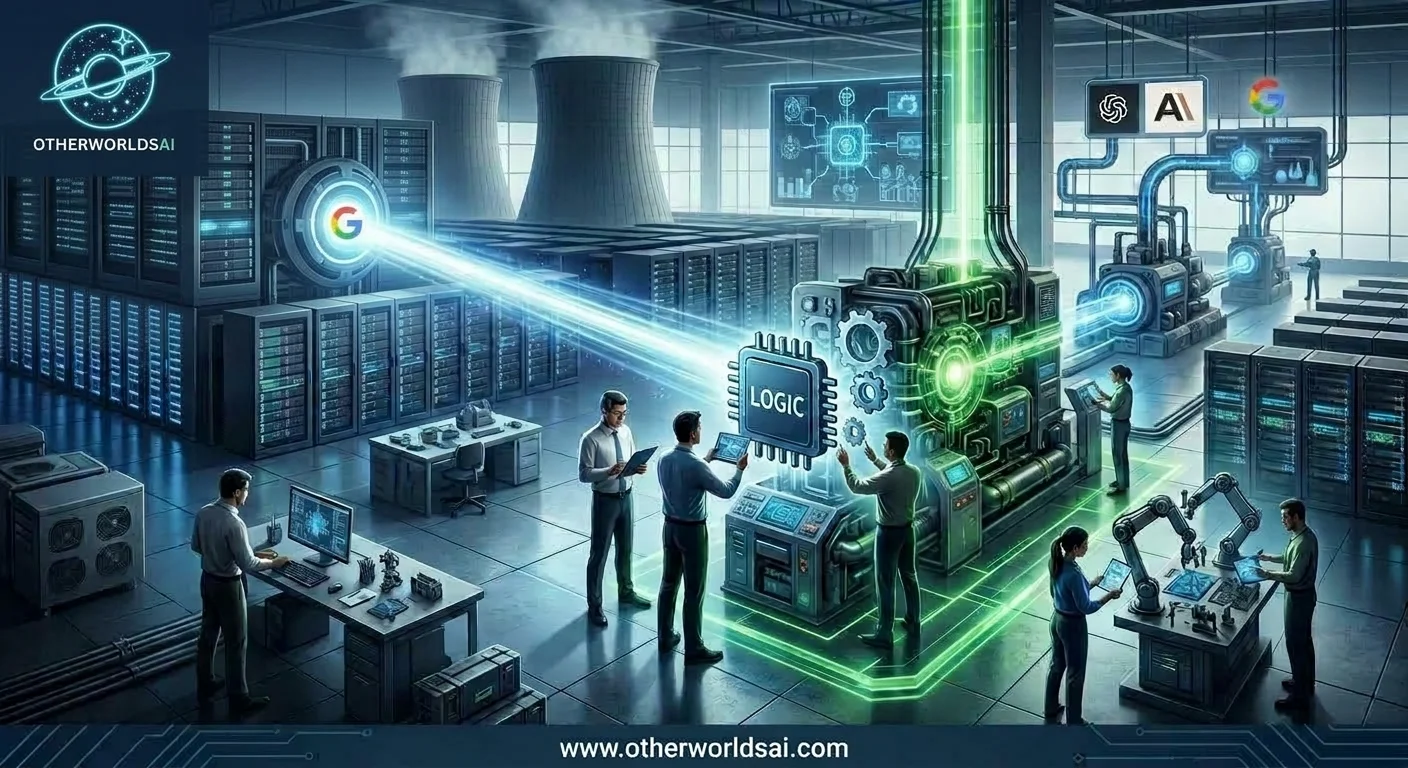
Anchoring SpaceX's AI revenue story are two landmark compute leasing deals signed in the lead-up to the IPO. Anthropic agreed to pay xAI $1.25 billion per month for compute access — one of the largest AI infrastructure agreements ever disclosed. Google followed with a deal worth $920 million per month, described by a Google representative as a short-term arrangement addressing unexpected demand from its recently launched AI products.
Both deals are non-binding, a detail that IPO investors appear willing to overlook given the scale of the commitments. Elon Musk has been characteristically vague about the duration of the Anthropic contract specifically, repeatedly downplaying the length of the arrangement in public statements while the financial press reported otherwise. Regardless of exact terms, the combination of these two agreements adds up to more than $2.1 billion in monthly compute revenue — a figure that, if sustained, would fundamentally transform SpaceX's loss-making financial profile.
The significance of these deals extends beyond the revenue numbers. Both Anthropic and Google are among the most sophisticated AI organizations in the world. Their willingness to pay SpaceX at this scale for compute access validates xAI's infrastructure capabilities and gives SpaceX a credible path to the AI business valuation that investors are pricing in.
$1.25B/mo: Anthropic Compute Deal
Meta's Next Big Bet: This New App Lets You Build Games Simply by Typing a Prompt
$920M/mo: Google Compute Deal
Support our research
Independent analysis fueled by you.
$2.17B: Combined Monthly AI Revenue
Q3 2026: Cursor Deal Close (Expected)
Section 5: Elon Musk, Voting Control, and the Governance Question:
SpaceX's IPO made Elon Musk the world's first trillionaire, with his paper wealth crossing the $1 trillion threshold on the strength of his shareholding in the newly public company. But the financial milestone comes paired with a governance structure that grants Musk a level of corporate control far exceeding what even other founder-led tech companies provide. Musk holds approximately 85.1% of SpaceX's voting power, giving him what analysts have described as a monarchical grip over the company's direction regardless of what public shareholders prefer.
The S-1 filing included a notable addition in its final amendments before the IPO date: a warning to prospective investors that significant share dilution could follow the public offering. This language, combined with Shotwell's comment on CNBC — that a merger between SpaceX and Tesla might make Musk's life easier — has kept Tesla shareholders and SpaceX investors alike speculating about what structural changes Musk may pursue now that SpaceX is a publicly traded entity with fresh capital and a sky-high valuation.
For SPV investors who held pre-IPO stakes in SpaceX through special purpose vehicles, the situation is more complicated. Lower-tier SPV holders face hidden fees, extended payout delays, and in some cases risks of outright fraud as the lock-up periods that prevent insider selling run their course. The IPO may have created trillions in paper wealth, but not all of it is equally accessible.
Musk now controls 85.1% of SpaceX's votes and has crossed the trillion-dollar personal wealth threshold. The IPO created enormous value — and concentrated enormous power in a single individual.
Section 6: What the SpaceX IPO Signals for Enterprise AI Infrastructure:
The SpaceX IPO is not just a financial event — it is a signal about where enterprise value is being created in the AI era. Investors are not valuing SpaceX as a rocket manufacturer that happens to run satellites. They are valuing it as an AI infrastructure company that controls compute, has acquired a leading developer tool, and is positioned to become a foundational layer of the global AI stack. The market is pricing the future, not the present financials.
The compute deals with Anthropic and Google illuminate a structural dynamic that every enterprise leader should understand. Even the world's most sophisticated AI labs — organizations spending billions to build frontier models — do not build all their own infrastructure. They lease compute, integrate third-party tools, and assemble capability through partnerships. Enterprise AI is not a monolithic product you buy from one vendor. It is an ecosystem of layered capabilities that businesses must navigate strategically.
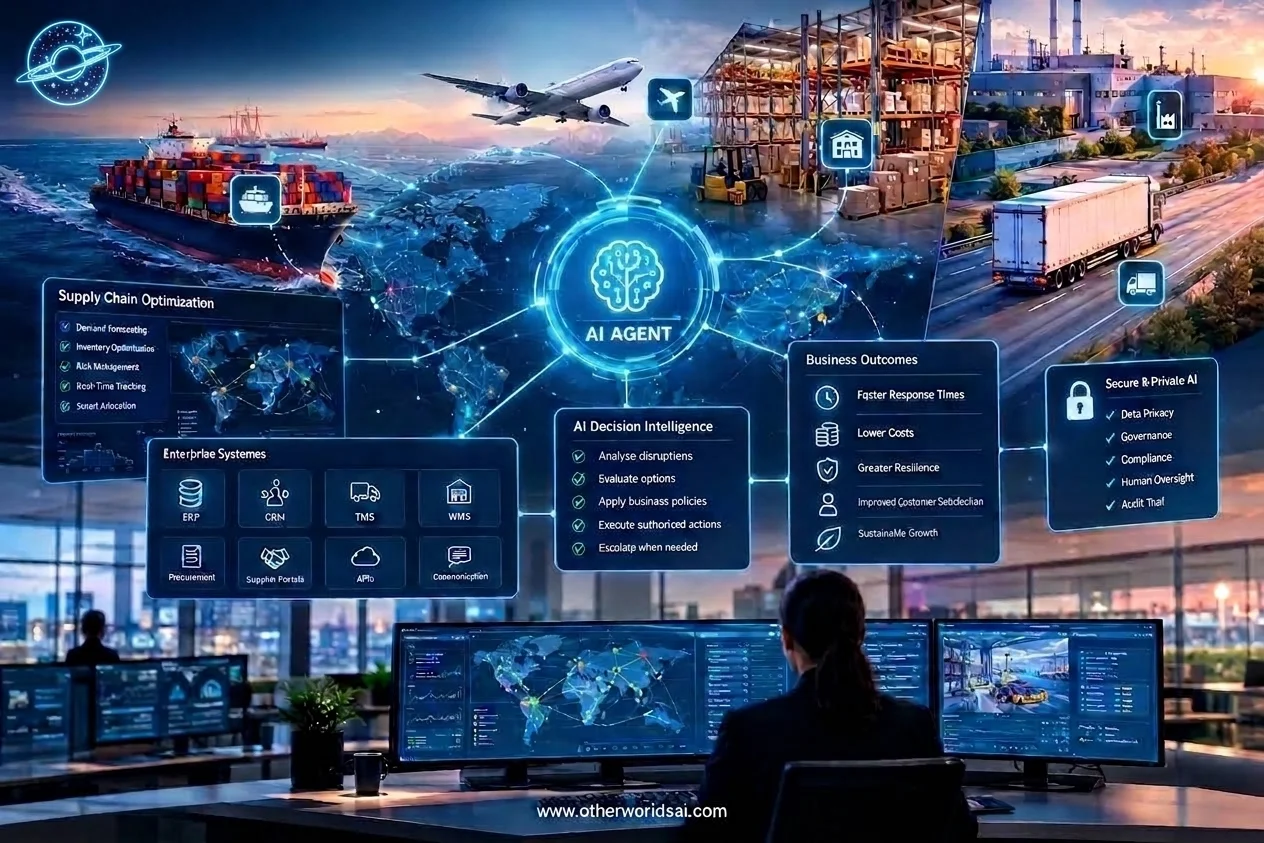
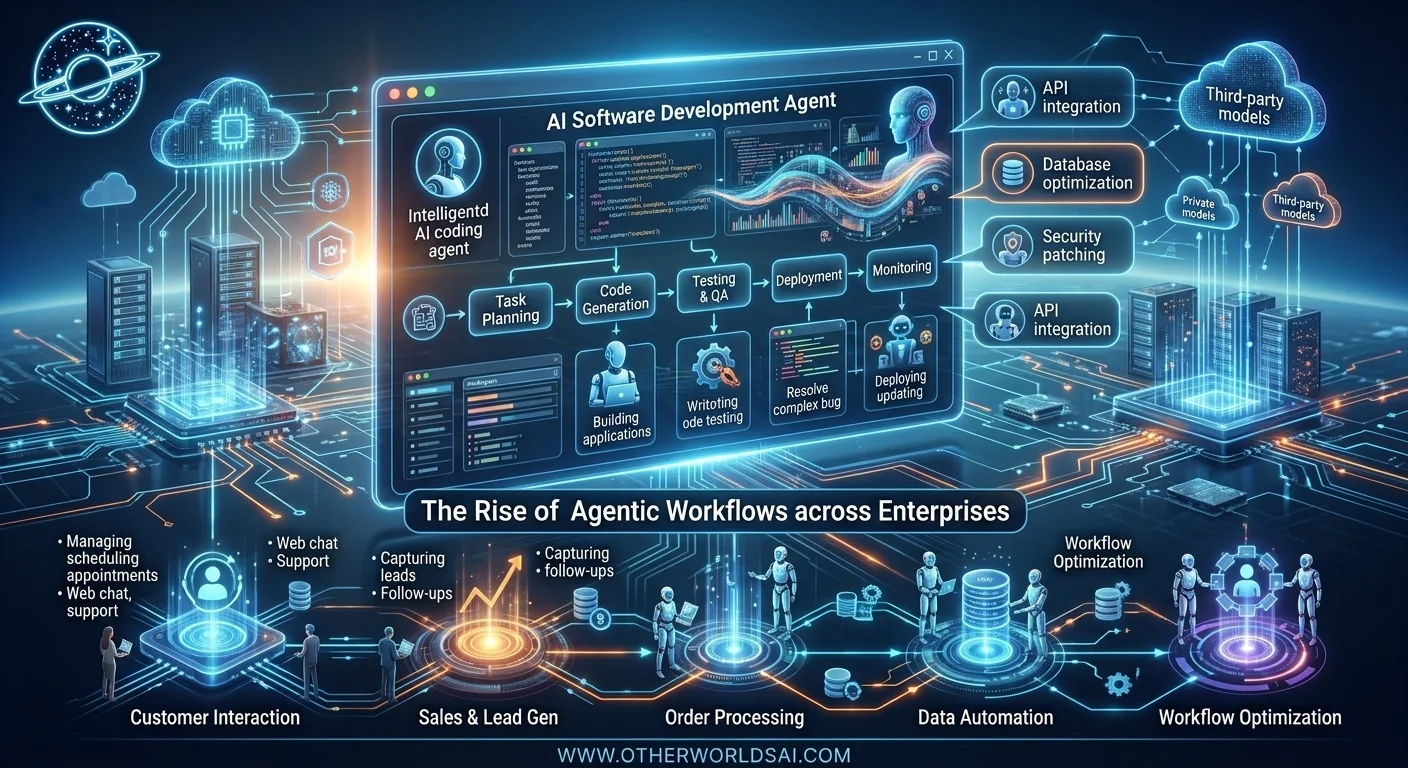
At Otherworlds AI, our Agent+ Business AI platform is designed for exactly this landscape. Rather than requiring enterprises to bet on a single AI provider — whether that is OpenAI, Anthropic, Google, or SpaceX's emerging stack — Agent+ integrates best-in-class AI capabilities into your business workflows regardless of which underlying models power them. Paired with Google Opal automated workflows, Agent+ enables the kind of multi-step, autonomous business process execution that the world's largest companies are now paying billions of dollars per month to access at the infrastructure layer.
The SpaceX IPO is proof that AI infrastructure is now one of the most valuable asset classes on earth. The enterprises that operationalize AI at the workflow layer today — not when the infrastructure wars have settled — are the ones that will define the competitive landscape of the next decade. Agent+ is how you get there.
Investors just valued an AI infrastructure bet at $2.6 trillion. Agent+ by Otherworlds AI brings that same infrastructure-level AI power to your enterprise workflows — without the rocket ship required.