
Google I/O 2026 AI Agents Explained: Gemini Spark, Information Agents, Android Halo, and Why Everyday Users Are Being Left Behind:
Is Google Ultra Worth It? The Real Cost of Unleashing Google's Newest Background Information Agents:
Introduction: Google I/O 2026 Promised an AI Agent Revolution — But Delivered a Confusing Mess:
Google's I/O developer conference in 2026 was supposed to be the moment AI agents went mainstream. Instead, it may be remembered as the moment Google revealed just how wide the gap has grown between its engineering ambitions and the needs of everyday users.
Across a packed keynote, Google unveiled a new wave of AI-powered tools: information agents, Gemini Spark, Android Halo, Daily Brief, and an increasingly agentic Chrome browser. Each one was technically impressive. Each one was also confusing, paywalled, or both. For the average person watching at home, Google I/O 2026 answered the question "What can AI do?" while completely failing to answer the one that actually matters: "What can AI do for me?"
Google Information Agents: Google Alerts Gets an AI-Powered Reinvention:
The most conceptually compelling product Google unveiled at I/O 2026 was information agents — a sweeping reimagination of the long-dormant Google Alerts service. Rather than simply notifying users when their name or a keyword appears somewhere online, the new AI-powered information agents are designed to run 24/7 in the background, proactively monitoring topics the user cares about — from market trends and price tracking to inclement weather warnings and breaking news alerts.
The promise here is genuinely powerful: an AI that works while you sleep, surfaces what matters, and filters out the noise. For professionals tracking competitor activity, investors monitoring market shifts, or parents watching for local safety alerts, this kind of always-on intelligence agent could be transformative.
The problem, as with much of what Google announced, is that information agents won't be available to the general public right away. Google Pro and Ultra subscribers in the U.S. will gain access starting this summer — everyone else waits.
Gemini Spark Review: Google's Most Personal AI Assistant Yet — If You Can Afford It:
Gemini Spark is Google's vision for what a truly personal AI assistant should look like in 2026. Deeply integrated with Gmail, Google Docs, Google Calendar, and Google Workspace, Spark is designed to manage the low-level cognitive overhead of modern digital life — surfacing themes from newsletters, organizing home inventory, tracking what needs restocking, and coordinating group travel plans.
On paper, Gemini Spark is one of the most ambitious personal AI agents any major tech company has released. The ability to connect across your entire Google ecosystem and take autonomous action — not just answer questions but do things — represents a meaningful leap beyond what most AI assistants currently offer. Google's demo showed Spark helping organize a neighborhood block party, which, while a questionable use case for enterprise-grade AI, at least illustrated the tool's capacity for multi-step task management.
The catch is significant: Gemini Spark is currently available only to Google Ultra subscribers — a premium tier that costs $100 per month. Google has said it plans to bring Spark to free users "when the time is right," but no concrete timeline has been given. For a tool this capable, limiting access to the company's wealthiest subscribers feels like a strategic misstep at best and a missed cultural moment at worst.
Android Halo Explained: A New Notification Layer for Gemini Spark — With a Branding Problem:
Alongside Gemini Spark, Google introduced Android Halo — a new notification system designed to surface updates and alerts from Spark directly on Android devices. In theory, Halo functions as the bridge between Spark's background activity and the user's moment-to-moment awareness, ensuring that the work your AI agent is doing actually reaches you in a timely, contextually relevant way.
In practice, Android Halo raises an immediate question: why does a notification feature for a Google AI assistant need its own standalone brand name? The answer likely lies in Google's notoriously competitive internal product culture, where teams are incentivized to brand their own work even at the cost of user clarity. The result is a consumer experience where you now need to track the difference between Gemini, Spark, Halo, information agents, and Daily Brief — four different names for what is, fundamentally, one interconnected AI system.
Android Halo is expected to ship to Android users later this year, though as with most of Google's I/O 2026 announcements, a specific launch date was not provided.
Google Daily Brief: The AI-Powered Personalized Digest Coming to Gemini:
Daily Brief is Google's answer to the growing demand for AI-curated personal news and task summaries. Built into the Gemini app, Daily Brief compiles a personalized digest from your Gmail inbox, Google Calendar, and task lists — delivering a structured audio or text update that gives you a snapshot of what matters most at the start of each day.
This positions Google's Daily Brief as a direct competitor to Spotify's Studio Labs personal podcast feature and Google's own NotebookLM, both of which launched similar AI-briefing capabilities around the same time. Daily Brief is rolling out now to Ultra, Pro, and Plus subscribers in the U.S. — making it one of the more broadly available features from I/O 2026, though still locked behind a paywall for free-tier users.
Google's Agentic Chrome Browser: Shopping, Configuring, and Browsing With AI Assistance:
One of the quieter but potentially most impactful announcements at Google I/O 2026 was the evolution of Chrome into an AI-first, agentic browser. Google demoed a scenario in which users could talk to Chrome while browsing car listings, with the browser's built-in AI helping to compare models, configure trim levels, and identify options within the user's budget — all without typing a single query or clicking through endless comparison tabs.
For anyone who has spent hours navigating automotive configurators or e-commerce comparison tools, the promise of an AI-powered Chrome agent is obvious. The broader implication — a browser that doesn't just display web content but actively navigates it on your behalf — points toward a future where AI agents replace manual browsing entirely for many everyday tasks. Whether users will embrace or resist that shift remains an open question.
The Google Ultra Problem: $100/Month AI Tools Are Widening the Digital Divide:
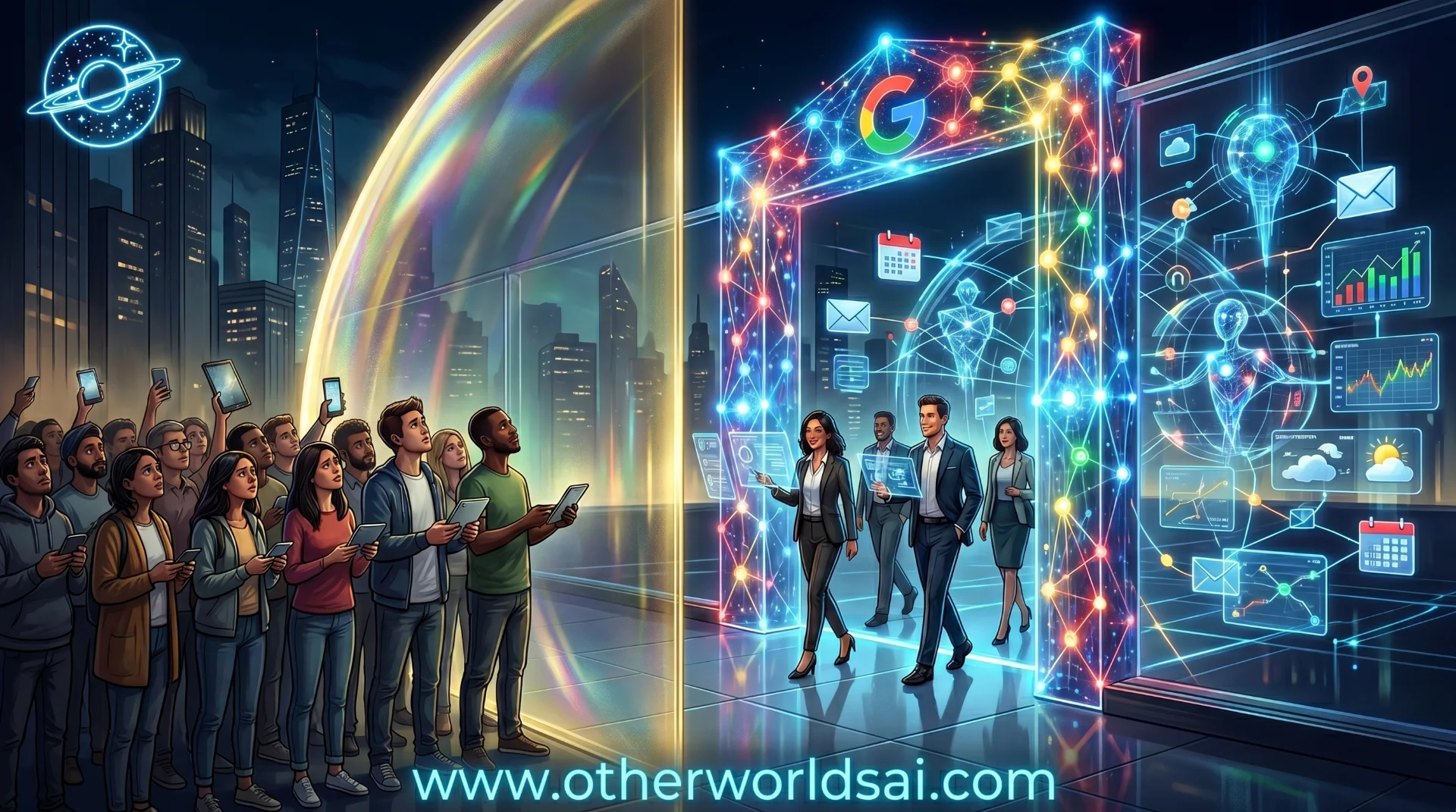
The most consistent thread running through Google's I/O 2026 announcements was also its most troubling: nearly every compelling new AI feature is locked behind the Google Ultra subscription at $100 per month. Information agents, Gemini Spark, and several other headline features are exclusively available to Google's wealthiest, most tech-forward users — at least for now.
Google's stated strategy is to iterate quickly with a committed group of power users before expanding to the broader public. That's a reasonable product development approach. But the messaging around it cements a troubling reality: AI is becoming a luxury product, with the most capable tools reserved for those who can afford premium subscriptions. In an era where AI is simultaneously being blamed for job displacement and promised as a productivity equalizer, this divide matters.
The contrast with Google's founding ethos is stark. When Google launched Gmail, it was a free service that dramatically improved on what came before — and users lined up for invites. When Google Search launched, it freely organized the early internet for everyone. The Google of 2026 is building its most revolutionary tools behind a $100/month paywall and telling everyone else to wait.
Google's Consumer Disconnect: Why Everyday Users Aren't Buying the AI Vision:
Beyond the pricing problem lies a deeper failure of communication and empathy. Google I/O 2026 was a showcase for engineers, by engineers — filled with technically impressive demos that struggled to connect with the real anxieties and needs of everyday users. The people watching Google I/O at home aren't thinking about Tensor chips and agentic browsers.
They're thinking about rising rents, grocery costs, and job security — including job security in the face of AI recruiting systems that reject their resumes based on minor formatting details. They're watching social media consume their children's attention and wondering whether the next wave of technology will make their lives better or just more complicated.
Instead of addressing those concerns directly, Google filled the gaps between presenters with goofy AI-generated imagery and played a Cinnamon Toast Crunch-style animated video featuring talking Tensor chips. One demo showed Android glasses transforming a photo of an audience into an image with a floating blimp — then sending that image to an Android Watch. It was technically functional. It was emotionally tone-deaf.
The message consumers most needed to hear — that AI agents would actually give them back their time — was never clearly made. Imagine if Google had led with this: "Instead of spending hours researching, organizing, and monitoring information, our AI agents do that work for you, so you can go offline and actually live your life." That message would have resonated — especially with younger generations actively embracing digital minimalism, retro tech, offline hobbies, and in-person social experiences over endless screen time.
Google's Missed Moment: What a Truly Consumer-
First AI Launch Would Have Looked Like Google I/O 2026 could have been a watershed moment — the event where AI agents became genuinely accessible to everyone, not just subscribers of a $100/month plan. Google had the technology, the platform scale, and the audience to pull it off. What it lacked was the will to prioritize mainstream accessibility over premium monetization.
Meanwhile, a new wave of messaging-first AI startups — including Poke, Poppy, RPLY, and Wingman — are showing a different path. These platforms allow users to interact with AI agents through the most natural, universally adopted interface already in their hands: text messaging. No new apps to download, no subscriptions to manage, no branding ecosystem to navigate. Just a message, and a useful reply.
When asked whether Gemini Spark would ever be accessible via text messaging, Google reps at I/O could only say it would happen "at some point in the future." For a company with Google's resources and ambition, "at some point in the future" is simply not good enough.
Final Thoughts: Google's AI Agent Ecosystem Is Impressive, But Missing Its Most Important User:
There is no question that the technology Google demonstrated at I/O 2026 is remarkable. Information agents that monitor the web 24/7. A personal assistant that manages your inbox and plans your travel. A browser that shops for you. An AI that compiles your entire digital life into a daily briefing. These are not incremental improvements — they are genuinely transformative capabilities.
The tragedy is that most people won't get to use them anytime soon. Locked behind a $100/month paywall, fragmented across four different brand names, and demonstrated through use cases that feel more at home in a product manager's slide deck than in real life, Google's AI agent ecosystem remains aspirational rather than accessible.
The company that once gave the world a free search engine, a free email client, and a free map of the entire planet now charges $100 a month to let you organize a block party with AI.
If Google wants AI agents to be the next great consumer revolution, it needs to remember the lesson it taught the world in the first place: the best technology isn't just powerful — it's available to everyone.
Google I/O 2026 | Google AI agents | Gemini Spark | Android Halo | Google information agents | Google Ultra plan | Daily Brief Google | Google AI features 2026 | Google Gemini updates | AI agent ecosystem | Google vs consumers | AI for everyday users
Support our research
Independent analysis fueled by you.