
The era of "seeing is believing" is officially over.
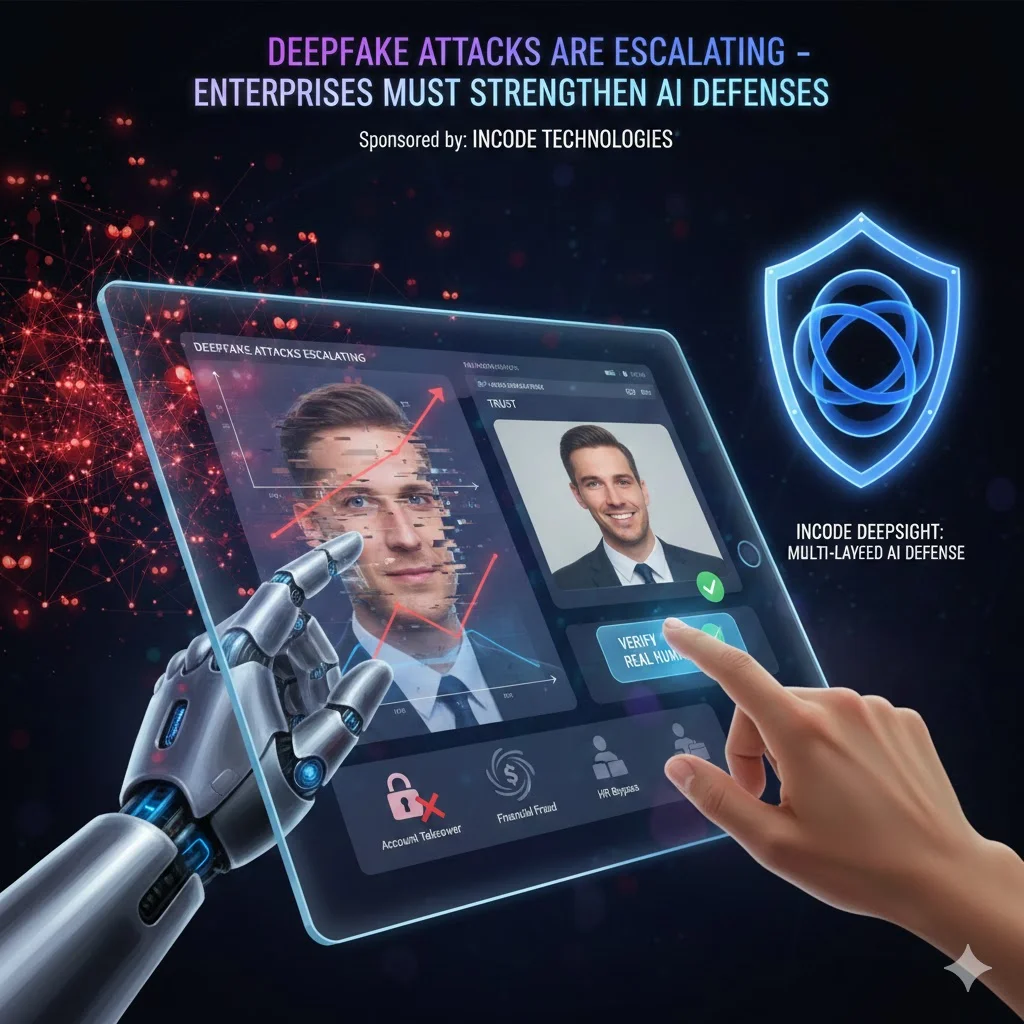
What started as a niche internet curiosity has morphed into a $1.5 billion threat to the global economy. As we move through 2026, deepfakes have transitioned from viral entertainment to a precision-guided weapon for cybercriminals, targeting everything from employee authentication to high-stakes financial onboarding.
With 72% of business leaders citing AI-generated fraud as their top operational concern this year, the question is no longer if your organization will be targeted, but whether your current security stack can tell the difference between a real human and a synthetic one.
The Evolution of the Threat: Beyond the "Uncanny Valley"
In the early days of synthetic media, spotting a fake was relatively simple. You looked for unnatural blinking, blurred edges around the jawline, or strange lighting. However, the latest generative models have virtually eliminated these visual "tells."
Modern deepfake attacks are no longer just about creating a convincing face; they are about compromising the entire digital handshake. Threat actors are now moving beyond visual manipulation to injection-style tactics.
How Attackers Bypass Traditional Defenses:
-
Virtual Cameras: Using software to mimic a physical webcam.
-
Emulated Devices: Running mobile environments on servers to bypass hardware-level security.
-
Stream Substitution: Feeding pre-recorded or AI-synthesized video directly into an authentication flow.
When an attacker injects a high-fidelity synthetic stream directly into the pipeline, traditional visual-only detection fails because it assumes the video source is a live, physical camera. This creates a massive vulnerability in account recovery, partner verification, and HR onboarding processes.
The High Cost of Synthetic Identity Fraud:
The data from 2025 paints a sobering picture of how quickly these attacks are scaling. Since 2023, deepfake-driven fraud has doubled in the banking sector and surged sixfold in the payments industry.
The risks are multifaceted:
-
Account Takeover (ATO): Attackers use synthetic media to bypass biometric checks, gaining full access to sensitive corporate data.
-
Synthetic Identity Creation: Combining real and fake data to open fraudulent accounts for money laundering.
-
Insider Threats: Fake applicants using deepfakes to pass HR verification, infiltrating organizations to exfiltrate data from the inside.
"When identity itself can be convincingly faked, trust collapses across every digital interaction," says Ricardo Amper, Founder and CEO of Incode Technologies.
Introducing Incode Deepsight: A Holistic Defense:
To combat a multi-vector threat, enterprises need a multi-layered response. Incode Deepsight represents a shift from simple "face-matching" to a comprehensive AI-driven fraud prevention ecosystem.
Rather than relying on a single signal, Deepsight utilizes a three-tier defense strategy:
Defense Layer : : Function : :Targeted Threat:
Perception Layer: :Analyzes motion, depth, and frame-by-frame consistency:
:Generative AI artifacts and "face swaps."

Meta's Next Big Bet: This New App Lets You Build Games Simply by Typing a Prompt
Behavioral Layer: :Monitors for bot-like repetition or unusual user interactions: :Automated sripts and mass-scale attacks.
Support our research
Independent analysis fueled by you.
Integrity Layer: :Validates the device, camera pipeline,and video feed source: :Injection attacks, virtual cameras, and emulators.
By treating the content and the capture path as a single threat surface, Deepsight closes the gap that manual reviewers—who are increasingly prone to fatigue and "high-confidence" errors—simply cannot bridge.
Proven Performance: Real-World Validation:
Efficacy in a lab is one thing; performance in the "wild" is another. Incode Deepsight was put to the test by Purdue University’s Political Deepfakes Incident Database (PDID). This benchmark uses the exact type of low-resolution, compressed media found on platforms like X (formerly Twitter), TikTok, and YouTube.
The results were industry-leading:
-
Highest Video Accuracy: 77.27% among commercial solutions.
-
Lowest False-Acceptance Rate (FAR): Achieving a 2.56% FAR for images.
-
Enterprise Scaling: Internal testing across 1.4 million sessions showed a 68× lower FAR than the closest competitor.
The Bottom Line for 2026:
As synthetic identity fraud continues to escalate, relying on human intuition or legacy biometric tools is a recipe for disaster. Enterprises must adopt automated, end-to-end defenses that can validate the integrity of the digital interaction from the hardware level up to the pixels on the screen.
Incode Deepsight provides the robust, low-friction protection necessary to scale a business without sacrificing security or user experience. In the battle against AI-driven deception, the best defense is even smarter AI.