
Artificial intelligence is transforming the global economy at an unprecedented pace.
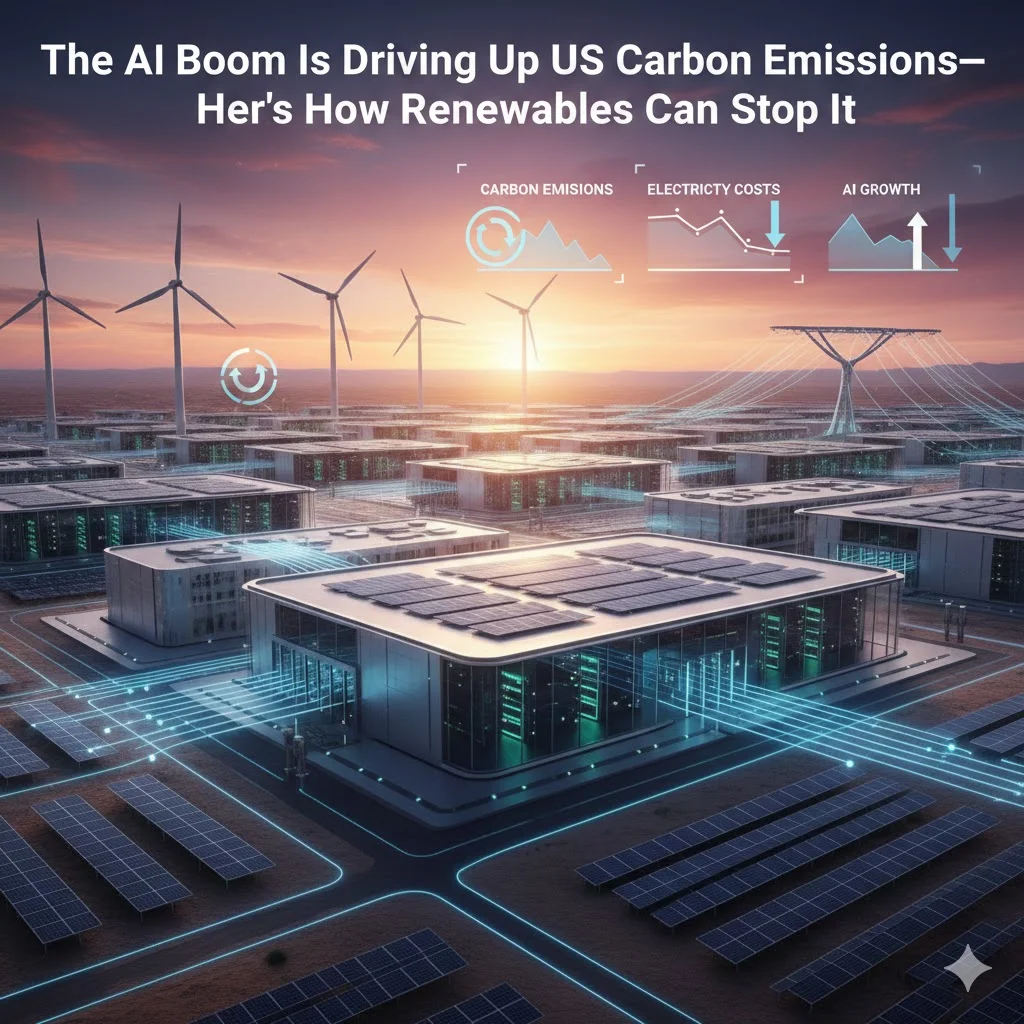
From generative AI models to cloud-based automation, the demand for computing power is exploding. However, as the world continues to warm and electricity prices become a central political issue in the United States, a growing concern is emerging: the AI-driven data center boom is poised to significantly increase US carbon emissions over the next decade.
A new analysis reveals that without strategic intervention, the rapid expansion of data centers could drive up power plant emissions and strain electricity grids nationwide. The good news is that this future is not inevitable. With the right combination of renewable energy deployment, smart policy design, and grid modernization, the US can support AI growth while keeping emissions and electricity costs under control.
Why AI and Data Centers Are Driving Energy Demand:
Modern AI systems are extremely energy-intensive. Training large language models, running cloud services, and supporting real-time AI applications require vast amounts of electricity. These workloads are primarily handled by data centers, which already account for a growing share of US electricity consumption.
According to energy researchers, data center electricity demand could double or even triple by the early 2030s, largely due to AI adoption. This surge places enormous pressure on regional power grids, especially in areas where data centers cluster, such as Texas, Virginia, Arizona, and the Midwest.
If this demand is met using existing fossil-fuel-heavy power generation—particularly natural gas and coal—it will result in a sharp increase in carbon emissions, undermining US climate goals and accelerating global warming.
The Emissions Problem: Fossil Fuels Fill the Gap:
When electricity demand spikes faster than new clean energy can be deployed, utilities often rely on gas-fired peaker plants or extend the life of aging coal facilities. This is exactly the risk posed by the AI boom.
New modeling shows that without changes in policy or planning, data centers could become one of the fastest-growing sources of indirect carbon emissions in the US economy. These emissions would not come from the AI systems themselves, but from the power plants supplying them.
Compounding the issue, electricity prices could rise as utilities pass infrastructure and fuel costs on to consumers—making AI-driven growth a pocketbook issue as well as an environmental one.
Renewables Offer a Clear Path Forward:
Despite these challenges, experts agree that renewable energy is the key to decoupling AI growth from carbon emissions.
Solar and wind power are now among the cheapest sources of new electricity in the United States. When paired with energy storage, they can reliably supply power to data centers at scale. In fact, renewables can reduce emissions while also helping stabilize or lower electricity prices, since they are not subject to fuel price volatility.
Many major technology companies already understand this. Firms like Google, Microsoft, Amazon, and Meta have committed to powering their data centers with 100 percent clean energy, often through long-term power purchase agreements that accelerate renewable deployment.
Smart Policies Can Make the Difference:
The analysis highlights several “low-friction” policy solutions that could significantly reduce emissions without slowing AI innovation:

Meta's Next Big Bet: This New App Lets You Build Games Simply by Typing a Prompt
- 1.Faster Grid Interconnection:
Renewable energy projects are often delayed for years due to interconnection backlogs. Streamlining approvals would allow clean power to come online faster.
Support our research
Independent analysis fueled by you.
- 2.Clean Energy Requirements for Data Centers:
States and utilities can require new data centers to procure or generate clean electricity, ensuring AI growth does not increase fossil fuel dependence.
- 3.Time-Based Energy Matching:
Encouraging data centers to match their electricity use with clean energy generation on an hourly basis reduces reliance on fossil fuels during peak demand.
- 4.Transmission Expansion:
Building new transmission lines enables renewable-rich regions to supply power to high-demand data center hubs.
AI, Climate Change, and the Cost of Electricity:
The intersection of AI development, climate change, and electricity affordability is becoming a defining policy issue. If managed poorly, the AI boom could worsen emissions and increase household energy bills. If managed well, it could accelerate the clean energy transition and strengthen grid resilience.
Importantly, renewables do not just benefit the climate—they also act as a hedge against rising electricity prices. As fossil fuel markets remain volatile, clean energy provides predictable, long-term cost stability.
A Choice, Not an Inevitability:
The rise of artificial intelligence does not have to come at the expense of the climate. The same innovation driving AI forward can be applied to energy systems, grid planning, and policy design.
The next decade will determine whether AI becomes a carbon liability or a clean energy catalyst. With proactive planning, renewable investment, and smart regulation, the US can power the AI revolution while keeping carbon emissions and electricity costs in check.
The AI boom is here. Whether it worsens climate change—or helps solve it—is a choice policymakers, utilities, and technology companies must make now.