
Glean AI Platform Battle 2025: How Enterprise AI Work Assistants Are Transforming Business Intelligence:
The enterprise AI landscape is undergoing a dramatic transformation. Companies are moving beyond simple chatbots that merely answer questions to intelligent systems that actively execute work across entire organizations. As this shift accelerates, a critical question emerges: who will control the AI infrastructure layer that powers everything?
From Enterprise Search to AI Work Assistant:
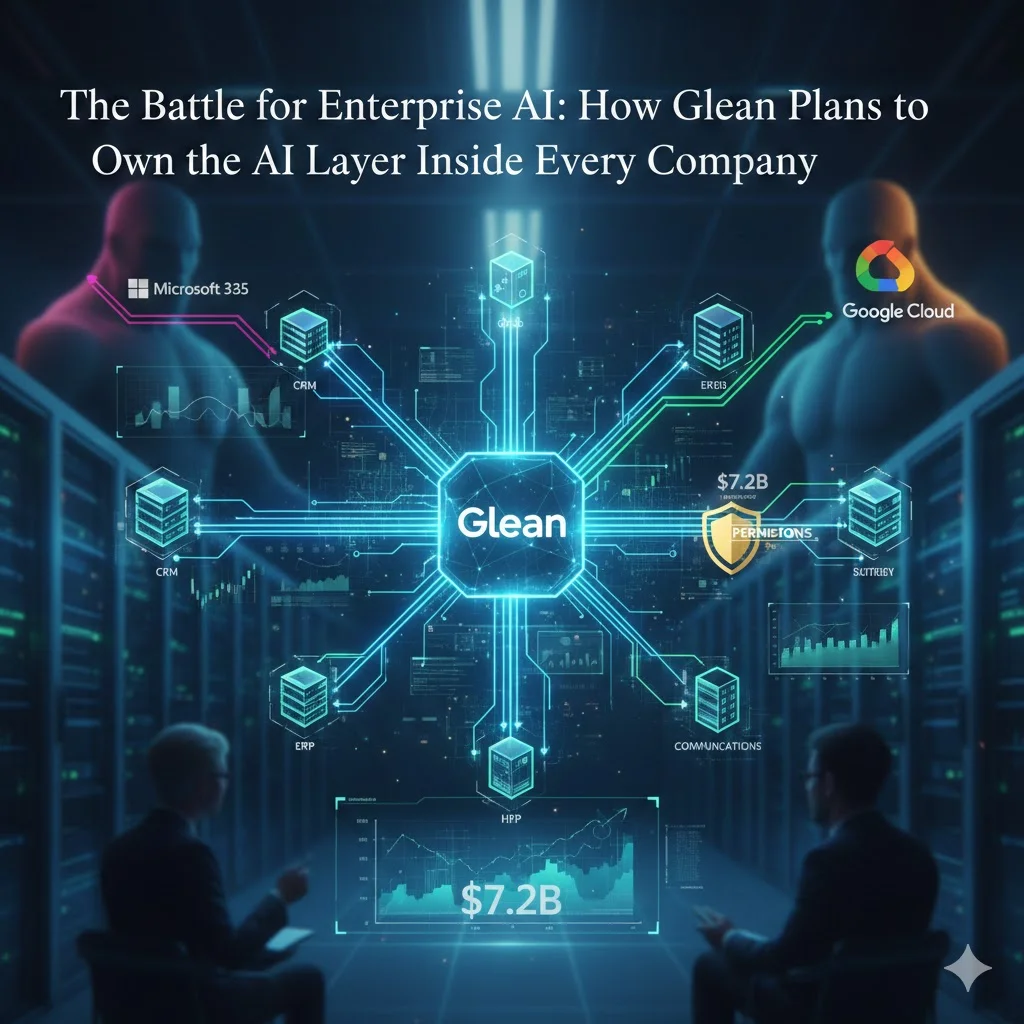
Glean, originally launched as an enterprise search solution, has evolved into something far more ambitious—what the company now calls an "AI work assistant." The platform aims to become the foundational layer beneath all other AI experiences within organizations, connecting seamlessly to internal systems, managing complex permissions, and delivering actionable intelligence wherever employees need it.
This strategic evolution hasn't gone unnoticed by investors. Last June, the startup secured $150 million in funding at an impressive $7.2 billion valuation, signaling strong confidence in its vision despite intensifying competition from technology giants who are bundling AI capabilities into their existing products.
The Fight for the AI Platform Layer:
The enterprise AI market is becoming a battlefield between two competing approaches. On one side, tech titans like Microsoft and Google are bundling AI features directly into their productivity suites, leveraging their existing customer relationships and integrations. On the other side, specialized platforms like Glean and its competitors are positioning themselves as independent AI infrastructure layers that can work across multiple systems and vendors.
This competition isn't just about features—it's about who controls the central nervous system of enterprise AI. The winner will determine how companies structure their AI strategies, manage their data, and deploy intelligent automation at scale.
What Sets Glean Apart in the Enterprise AI Race:
Glean's approach focuses on solving problems that many organizations underestimate until they're deep into AI implementation. The platform emphasizes three critical areas:
-
Comprehensive System Integration: Rather than existing as another standalone tool, Glean connects to internal systems across the organization, creating a unified AI layer that understands context from multiple data sources.
-
Permissions and Governance: One of the most complex challenges in enterprise AI is maintaining proper access controls and data governance. Glean has made this a core competency, ensuring that AI-powered systems respect organizational security boundaries and compliance requirements.
-
Cross-Platform Intelligence Delivery: The platform delivers AI capabilities wherever employees work, rather than forcing them to adopt new interfaces or workflows.
AI Adoption Reshaping Enterprise Leadership:
In a conversation on TechCrunch's Equity podcast, Glean founder and CEO Arvind Jain discussed with host Rebecca Bellan how AI adoption is fundamentally reshaping leadership thinking and organizational design. The interview, recorded at Web Summit Qatar, revealed insights into how forward-thinking companies are approaching their AI architecture decisions.
According to the discussion, enterprise leaders are grappling with questions about consolidation versus best-of-breed approaches, how to structure teams around AI capabilities, and where to invest their limited resources as the technology continues to evolve rapidly.
The Agent Hype Cycle: Separating Reality from Fiction:
The conversation also addressed what's genuine versus overhyped in the AI agent space. While the promise of autonomous AI agents handling complex workflows is compelling, implementation challenges around reliability, security, and integration remain significant hurdles for most organizations.
Jain's perspective on this topic comes from direct experience working with enterprise customers navigating these decisions. The reality is that successful AI deployment requires more than just sophisticated models—it demands robust infrastructure, careful governance, and thoughtful integration with existing systems.
The Harder Problems Enterprises Face:
Permissions and governance emerge as consistently underestimated challenges in enterprise AI rollouts. Most companies realize too late that managing who can access what information through AI systems is exponentially more complex than traditional access control. When AI can synthesize information from dozens of sources to answer a single query, ensuring appropriate access boundaries becomes a sophisticated technical and policy challenge.
This is where platform players like Glean believe they have an advantage over bundled solutions from larger vendors. By making these complex problems their core focus rather than an afterthought, they aim to provide more robust and trustworthy AI infrastructure.
The Future of Enterprise AI Architecture:
As organizations continue investing in AI capabilities, the question of infrastructure becomes increasingly strategic. Will companies standardize on bundled solutions from their existing vendors, or will they adopt independent AI platforms that promise greater flexibility and specialization?
The $7.2 billion valuation Glean commanded suggests that investors see significant opportunity in the platform approach. However, the competitive landscape remains fluid, with well-resourced tech giants continuously improving their offerings and leveraging their existing market positions.
Conclusion: A Defining Moment for Enterprise AI:
The enterprise AI market is at an inflection point. As systems evolve from answering questions to actually performing work, the underlying infrastructure becomes mission-critical. Glean's transformation from search tool to comprehensive AI work assistant represents one bet on how this market will develop.
Whether the future belongs to independent platforms, bundled solutions from tech giants, or some hybrid approach remains to be seen. What's certain is that the decisions companies make now about their AI architecture will shape their competitive capabilities for years to come.
The battle for the enterprise AI layer has begun, and the stakes couldn't be higher.
Engineering
The Future.
No spam. Only high-signal AI dispatch.
Support our research
Independent analysis fueled by you.