
Despite incredible advances in modern biotechnology,
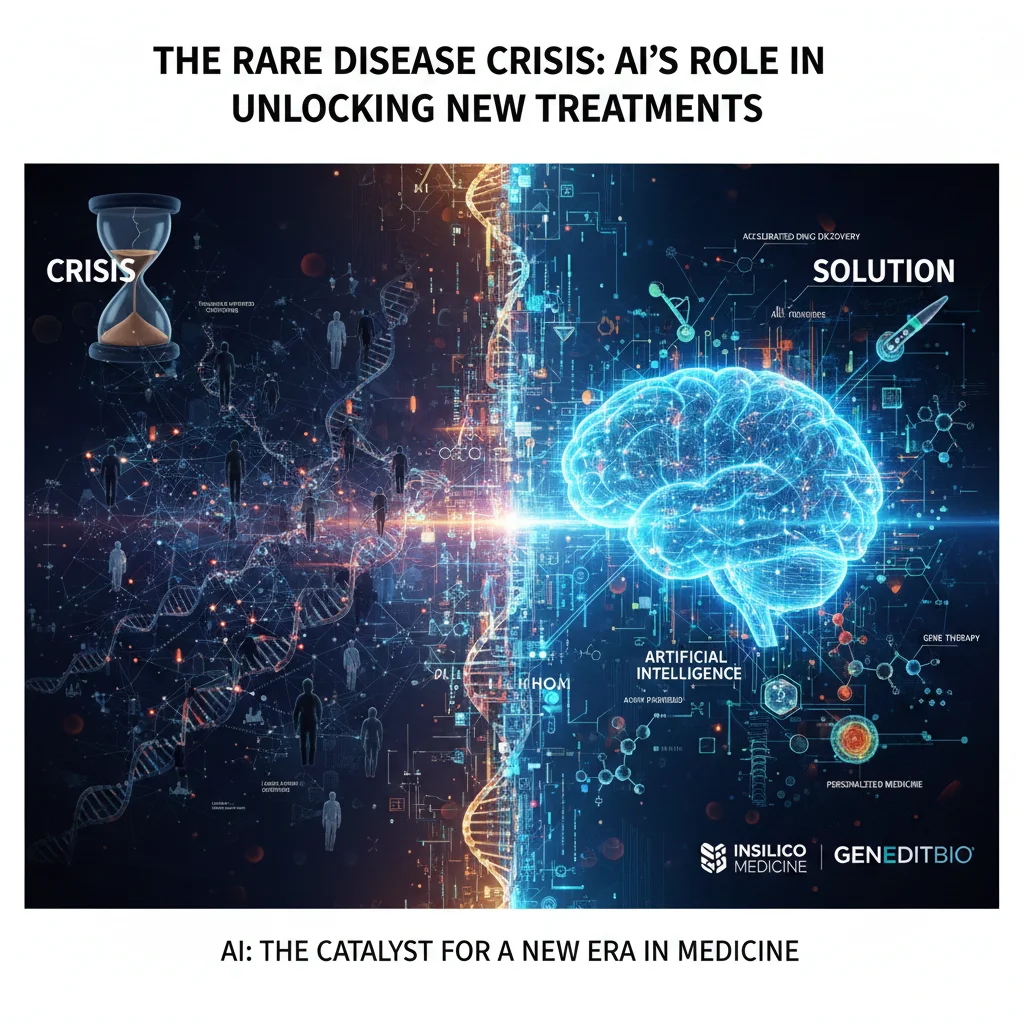
including powerful gene editing tools and sophisticated drug design capabilities, thousands of rare diseases still lack effective treatments. The problem isn't a lack of scientific knowledge—it's a critical shortage of skilled researchers and the enormous resources required to develop therapies for conditions that affect small patient populations.
Enter artificial intelligence. Companies like Insilico Medicine and GenEditBio are pioneering AI-driven approaches that promise to dramatically accelerate drug discovery and gene therapy development, making previously "untreatable" rare diseases viable targets for pharmaceutical innovation.
Understanding the Labor Shortage in Pharmaceutical Research:
Why Traditional Drug Development Can't Keep Up:
The pharmaceutical industry faces a fundamental challenge: developing treatments for rare diseases requires the same intensive research effort as common conditions, but serves far fewer patients. This economic reality has left many rare disorders neglected, with patients facing limited or nonexistent treatment options.
According to Alex Aliper, President of Insilico Medicine, the missing ingredient has been human capital. "There are still thousands of diseases without a cure, without any treatment options, and there are thousands of rare disorders which are neglected," Aliper explained at Web Summit Qatar. "So we need more intelligent systems to tackle that problem."
How AI Serves as a Force Multiplier for Scientists:
Artificial intelligence is emerging as the solution to this labor bottleneck. By automating complex analytical tasks that once required teams of specialized chemists and biologists, AI enables small research groups to accomplish what would traditionally demand hundreds of scientists working for years.
This "force multiplier" effect means that:
-
Research teams can explore more therapeutic candidates simultaneously.
-
Drug discovery timelines shrink from years to months.
-
Costs decrease dramatically, making rare disease research economically viable.
-
Scientists can focus on creative problem-solving rather than repetitive analysis.
-
Previously neglected diseases become attractive research targets.
Insilico Medicine's Pharmaceutical Superintelligence Vision:
Building AI Models for Drug Discovery:
Insilico Medicine is developing what Aliper calls "pharmaceutical superintelligence"—advanced AI systems capable of performing multiple drug discovery tasks with superhuman accuracy. The company recently launched its MMAI Gym, a training platform designed to transform generalist large language models (like ChatGPT and Google's Gemini) into specialized pharmaceutical research tools.
How Insilico's AI Platform Works:
The company's multimodal, multitask AI system:
-
Ingests vast datasets including biological, chemical, and clinical information.
-
Generates hypotheses about disease targets and potential therapeutic molecules.
-
Automates complex screening that traditionally required large research teams.
-
Identifies drug repurposing opportunities by analyzing existing medications for new uses.
-
Nominates high-quality candidates for further development and testing.
Real-World Application: AI-Powered Drug Repurposing for ALS:
One compelling example of Insilico's AI capabilities involves amyotrophic lateral sclerosis (ALS), a devastating neurological disorder with limited treatment options. The company's AI models analyzed existing approved drugs to identify potential candidates for repurposing to treat ALS—a process that would take human researchers months or years but was completed in a fraction of the time.
Drug repurposing offers several advantages:
-
Medications already have established safety profiles.
-
Development timelines are significantly shorter.
-
Regulatory approval processes are streamlined.
-
Costs are lower than developing entirely new compounds.
-
Treatments can reach patients faster.
GenEditBio's Revolutionary Approach to Gene Editing:
The Evolution of CRISPR Technology:
While AI-driven drug discovery addresses many rare diseases, some conditions require interventions at a more fundamental biological level. This is where CRISPR gene editing technology becomes essential.
GenEditBio represents the "second wave" of CRISPR applications, moving beyond traditional ex vivo gene editing (modifying cells outside the body before reintroducing them) to in vivo gene editing (making precise genetic changes directly inside the patient's body).
What Makes In Vivo Gene Editing Revolutionary:
Co-founder and CEO Tian Zhu explained that GenEditBio's goal is transforming gene therapy into a simple, one-time injection delivered directly to affected tissue. This approach offers:
-
Convenience: No need to extract, modify, and reintroduce cells.
-
Accessibility: Simpler procedures mean more patients can receive treatment.
-
Precision: Direct delivery to target tissues increases effectiveness.
-
Affordability: Streamlined processes reduce overall treatment costs.
-
Scalability: Standardized delivery systems work across multiple patients.
The NanoGalaxy Platform: AI-Powered Delivery Vehicles:
Understanding Engineered Protein Delivery Vehicles (ePDVs):
GenEditBio has developed proprietary ePDVs (engineered protein delivery vehicles)—virus-like particles designed to safely transport gene-editing tools into specific cells. The company maintains a massive library containing thousands of unique, nonviral, nonlipid polymer nanoparticles, each optimized for different delivery scenarios.
"We learn from nature and use AI machine learning methods to mine natural resources and find which kinds of viruses have an affinity to certain types of tissues," Zhu explained.
How AI Optimizes Gene Therapy Delivery:
The NanoGalaxy platform leverages artificial intelligence to:
-
Analyze chemical structures and their correlation with tissue targeting capabilities.
-
Predict modifications that improve delivery efficiency to specific organs (eye, liver, nervous system).
-
Minimize immune responses by identifying vehicle designs that avoid triggering rejection.
-
Refine predictions through continuous learning from wet lab testing results.
-
Accelerate development of tissue-specific delivery systems.
Clinical Success: FDA Approval for Corneal Dystrophy Treatment:
GenEditBio recently achieved a significant milestone: FDA approval to begin clinical trials for a CRISPR therapy targeting corneal dystrophy, a rare eye condition that causes progressive vision loss.
This approval validates the company's AI-driven approach to developing safe, effective gene editing therapies and opens the door for treatments addressing other rare genetic disorders.
The Critical Data Challenge in AI-Driven Biotech:
Why Quality Data Matters for Machine Learning in Healthcare:
As with all AI-driven systems, the effectiveness of artificial intelligence in biotechnology ultimately depends on access to high-quality, diverse data. Modeling the complex variations of human biology requires far more comprehensive datasets than currently exist.
Geographic and Demographic Data Bias:
Aliper highlighted a significant challenge: "The corpus of data is heavily biased over the Western world, where it is generated. I think we need to have more efforts locally, to have a more balanced set of original data, or ground truth data, so that our models will also be more capable of dealing with it."
This data bias means AI models may be:
-
Less accurate for non-Western populations.
-
Missing important genetic variations found in diverse populations.
-
Limited in their ability to develop personalized treatments globally.
-
Potentially perpetuating healthcare disparities.
Innovative Solutions to the Data Problem:
Insilico's Automated Laboratory Data Generation:
Insilico Medicine operates automated laboratories that generate multi-layer biological data from disease samples at scale, without human intervention. This data feeds directly into the company's AI-driven discovery platform, creating a continuous improvement cycle that:
-
Produces consistent, standardized datasets.
-
Operates 24/7 to maximize data generation.
-
Eliminates human error and bias.
-
Scales efficiently as the platform grows.
GenEditBio's Evolutionary Data Mining:
Zhu takes a different approach, arguing that the data AI needs already exists—encoded in human DNA through thousands of years of evolution. While only a small fraction of DNA directly codes for proteins, the remainder acts as an instruction manual for gene behavior.
This "non-coding" DNA has historically been difficult for humans to interpret, but AI models—including recent breakthroughs like Google DeepMind's AlphaGenome—are increasingly capable of extracting meaningful insights from this genetic information.
GenEditBio applies similar principles in the lab, testing thousands of delivery nanoparticles in parallel rather than sequentially. These large-scale experiments generate what Zhu calls "gold for AI systems"—rich datasets that train models more effectively and support collaborative research partnerships.
The Future of AI in Pharmaceutical Development:
Digital Twins and Virtual Clinical Trials:
Looking ahead, Aliper identified digital twins of humans as one of the next major frontiers in AI-driven drug development. These sophisticated computer models would simulate individual patients, enabling researchers to run virtual clinical trials that:
-
Test drug safety and efficacy without human risk.
-
Explore personalized treatment responses.
-
Accelerate the clinical trial process.
-
Reduce development costs dramatically.
-
Enable precision medicine approaches.
Aliper acknowledged this technology is "still in nascence" but expressed optimism about its potential to transform pharmaceutical research within the next decade.
Increasing the Pace of Drug Approvals:
Currently, the FDA approves approximately 50 new drugs annually—a number that has remained relatively flat despite growing medical needs. Aliper emphasized the urgency of accelerating this pace:
"We're in a plateau of around 50 drugs approved by the FDA every year annually, and we need to see growth. There is a rise in chronic disorders because we are aging as a global population."
The Vision: Personalized Medicine for All:
Both executives share a common vision: making advanced, personalized treatments accessible to patients globally, regardless of the rarity of their condition.
"It's like getting an off-the-shelf drug [that works] for multiple patients, which makes the drugs more affordable and accessible to patients globally," Zhu explained.
Aliper's timeline is ambitious but grounded in current progress: "My hope is in 10 to 20 years, we will have more therapeutic options for the personalized treatment of patients."
How AI Drug Discovery Benefits Different Stakeholders:
For Patients with Rare Diseases:
Immediate Benefits:
-
Access to treatments for previously neglected conditions.
-
Faster development timelines mean therapies reach patients sooner.
-
Lower costs make treatments more affordable.
-
Personalized approaches increase effectiveness.
-
More convenient delivery methods (like one-time injections).
For Pharmaceutical Companies:
Business Advantages:
-
Reduced research and development costs.
-
Shorter timelines from discovery to market.
-
Ability to target economically viable rare disease markets.
-
More efficient use of research resources.
-
Higher success rates in drug development.
For Healthcare Systems:
Systemic Improvements:
-
More treatment options reduce long-term healthcare costs.
-
Preventive gene therapies decrease chronic disease burden.
-
Improved drug safety through better predictive modeling.
-
Greater accessibility of advanced treatments.
-
Reduced healthcare disparities through global data inclusion.
For Researchers and Scientists:
Professional Opportunities:
-
Focus on creative problem-solving rather than repetitive tasks.
-
Ability to tackle more ambitious research questions.
-
Collaboration with AI systems enhances productivity.
-
Access to better tools and datasets.
-
Opportunity to make breakthroughs in neglected areas.
Key Technologies Driving the AI Biotech Revolution:
Machine Learning Models in Drug Discovery:
Types of AI Used:
-
Large Language Models (LLMs): Adapted from general AI like ChatGPT to understand chemical and biological language.
-
Deep Learning Networks: Analyze complex molecular interactions and predict drug behavior.
-
Predictive Analytics: Forecast clinical trial outcomes and patient responses.
-
Natural Language Processing: Extract insights from scientific literature and clinical records.
-
Computer Vision: Analyze microscopy images and cellular responses.
CRISPR and Gene Editing Technologies:
Key Innovations:
-
Cas9 and next-generation enzymes: More precise cutting mechanisms.
-
Base editors: Change individual DNA letters without cutting.
-
Prime editing: Highly precise insertions and deletions.
-
Epigenome editing: Control gene expression without altering DNA sequence.
-
Delivery systems: Nanoparticles and viral vectors for targeted delivery.
Multimodal AI Platforms:
Integration Capabilities:
-
Combine biological, chemical, and clinical data.
-
Perform multiple tasks simultaneously.
-
Learn from diverse data sources.
-
Adapt to new disease areas quickly.
-
Scale efficiently as datasets grow.
Challenges and Considerations in AI-Driven Healthcare:
Regulatory Considerations:
The FDA and other regulatory agencies are developing frameworks to evaluate AI-driven drug discovery and gene editing therapies, balancing:
-
Safety requirements with innovation speed.
-
Traditional clinical trial standards with virtual testing methods.
-
Transparency demands with proprietary AI algorithms.
-
Patient protection with accessible treatment timelines.
Ethical Considerations:
Important Questions:
-
How do we ensure equitable access to AI-developed treatments?
-
What safeguards prevent AI bias from affecting patient care?
-
How should intellectual property work for AI-generated discoveries?
-
What role should human oversight play in AI-driven research?
-
How do we protect patient data used to train AI models?
Technical Limitations:
Current Challenges:
-
AI models require enormous computational resources.
-
Data quality and diversity remain limiting factors.
-
Biological complexity can exceed AI predictive capabilities.
-
Integration with existing research workflows takes time.
-
Validation of AI predictions still requires extensive laboratory work.
The Competitive Landscape in AI Biotech:
Major Players in AI Drug Discovery:
Leading Companies:
-
Insilico Medicine: Pharmaceutical superintelligence and aging research.
-
Recursion Pharmaceuticals: High-throughput cellular imaging and analysis.
-
Exscientia: AI-designed drugs in clinical trials.
-
BenevolentAI: Knowledge graph-based drug discovery.
-
Atomwise: Structure-based drug design using deep learning.
Gene Editing and Delivery Innovators:
Key Companies:
-
GenEditBio: In vivo CRISPR delivery systems.
-
Intellia Therapeutics: Clinical-stage in vivo gene editing.
-
Beam Therapeutics: Base editing technologies.
-
Prime Medicine: Prime editing platforms.
-
Verve Therapeutics: Cardiovascular gene editing.
Practical Implications for Stakeholders:
For Healthcare Investors:
Investment Opportunities:
-
AI drug discovery platforms show strong ROI potential.
-
Gene editing companies address large unmet medical needs.
-
Rare disease focus offers orphan drug incentives.
-
Personalized medicine represents growing market segment.
-
Data infrastructure and computational biology tools.
For Medical Professionals:
Clinical Practice Changes:
-
More treatment options for rare disease patients.
-
Genetic testing becomes more actionable.
-
Personalized treatment selection improves outcomes.
-
Faster access to novel therapies through accelerated timelines.
-
Collaboration with AI systems in treatment planning.
For Patients and Advocacy Groups:
Action Steps:
-
Participate in data-sharing initiatives to improve AI models.
-
Advocate for equitable access to AI-developed treatments.
-
Support clinical trials for rare disease therapies.
-
Engage with patient registries to contribute valuable data.
-
Stay informed about emerging treatment options.
Conclusion: AI as the Catalyst for a New Era in Medicine:
The convergence of artificial intelligence, gene editing, and pharmaceutical research represents one of the most promising developments in modern medicine. Companies like Insilico Medicine and GenEditBio demonstrate that AI can solve the labor shortage that has left thousands of rare diseases untreated for decades.
By automating complex research tasks, analyzing vast datasets, and identifying novel therapeutic approaches, AI enables small teams to accomplish what previously required massive research institutions. This democratization of drug discovery and gene therapy development means:
-
More diseases will have treatment options.
-
Therapies will reach patients faster.
-
Costs will decrease, improving accessibility.
-
Personalized medicine will become standard care.
-
Healthcare disparities may narrow.
While challenges remain—including data bias, regulatory frameworks, and ethical considerations—the trajectory is clear. Within 10 to 20 years, we may see a fundamental transformation in how medicine approaches rare diseases, chronic conditions, and personalized treatment.
The question is no longer whether AI will revolutionize pharmaceutical research, but how quickly we can realize its full potential to benefit patients worldwide.
Support our research
Independent analysis fueled by you.